Neighborhood Foresters
A Paid Urban Forestry Training & Mentoring Program
*Applications for 2026 are closed*
This spring, PLAY Boulder Foundation’s Tree Trust is excited to launch the Neighborhood Foresters program, in partnership with the City of Boulder.
Neighborhood Foresters is a paid training and mentoring program designed to provide year-round stewardship of trees and landscapes within three select neighborhoods within the City of Boulder. These neighborhoods include:
Central Boulder, centered around the Family Learning Center, the San Juan del Centro community, and Howard Heuston Park.
Southeast Boulder, centered around the Boulder Community School of Integrated Studies, High Peaks Elementary School, and Aurora 7 Park.
South Boulder, centered around Horizons K-8 Charter School and Admiral Burke Park
What Do Neighborhood Foresters Do?
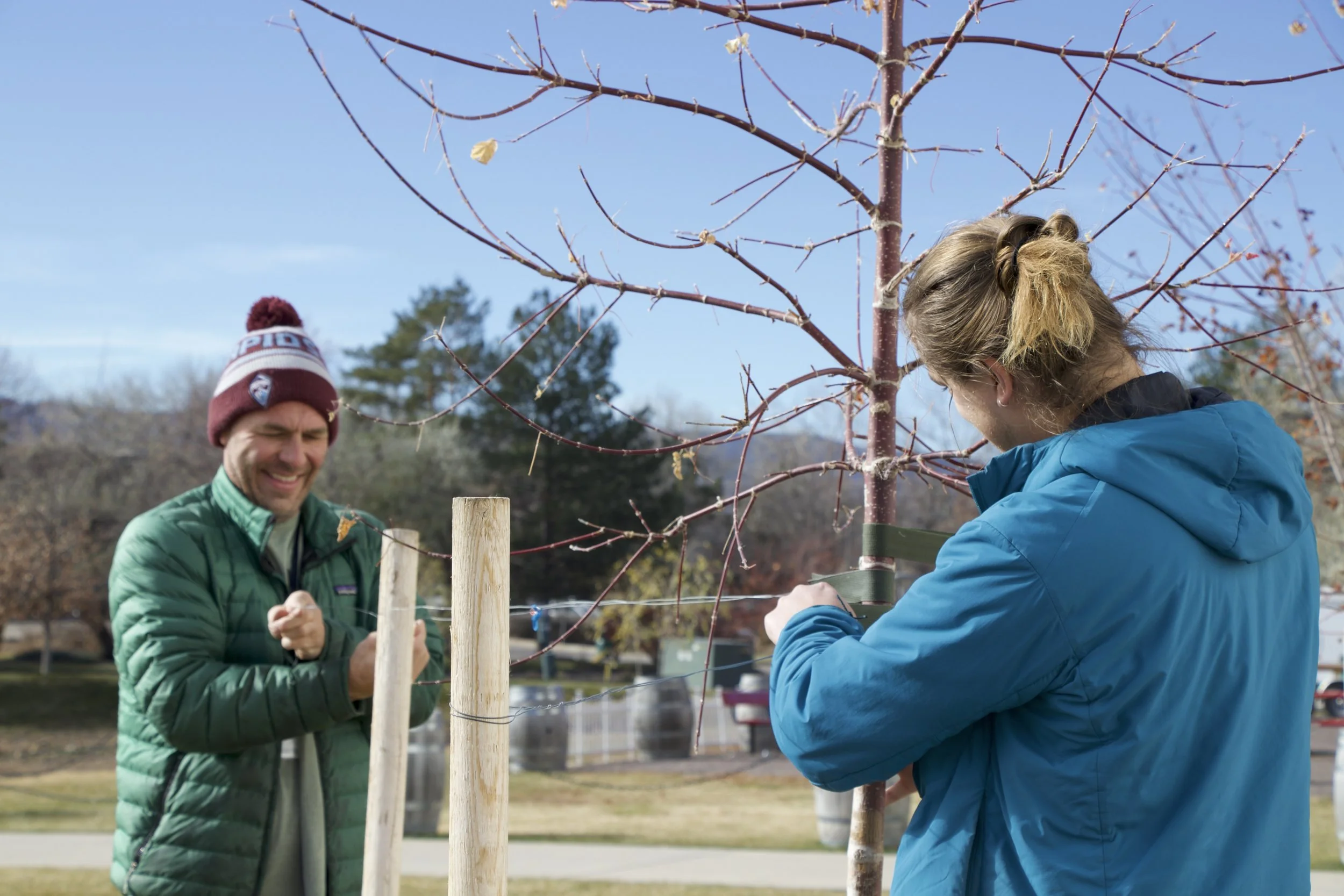
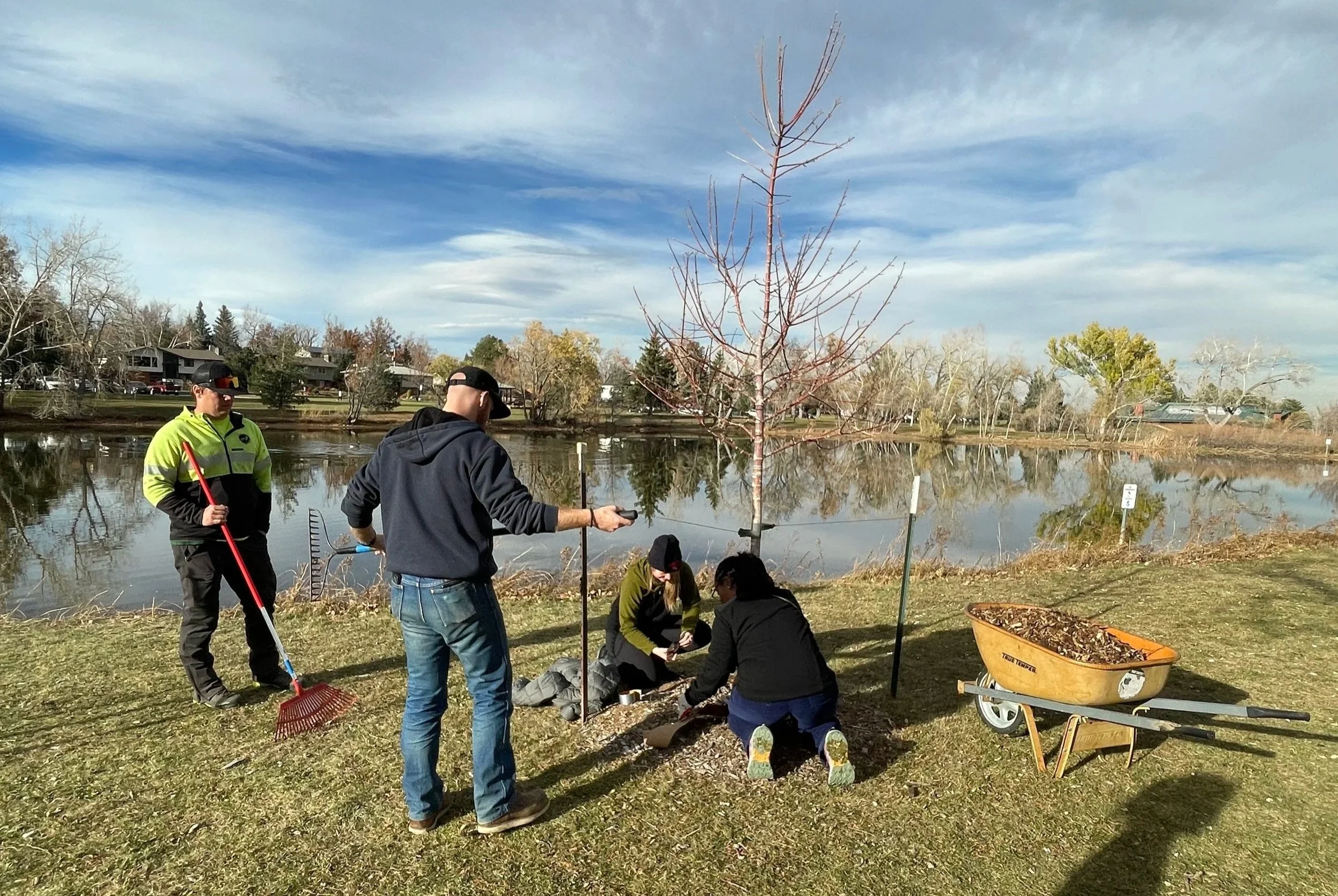
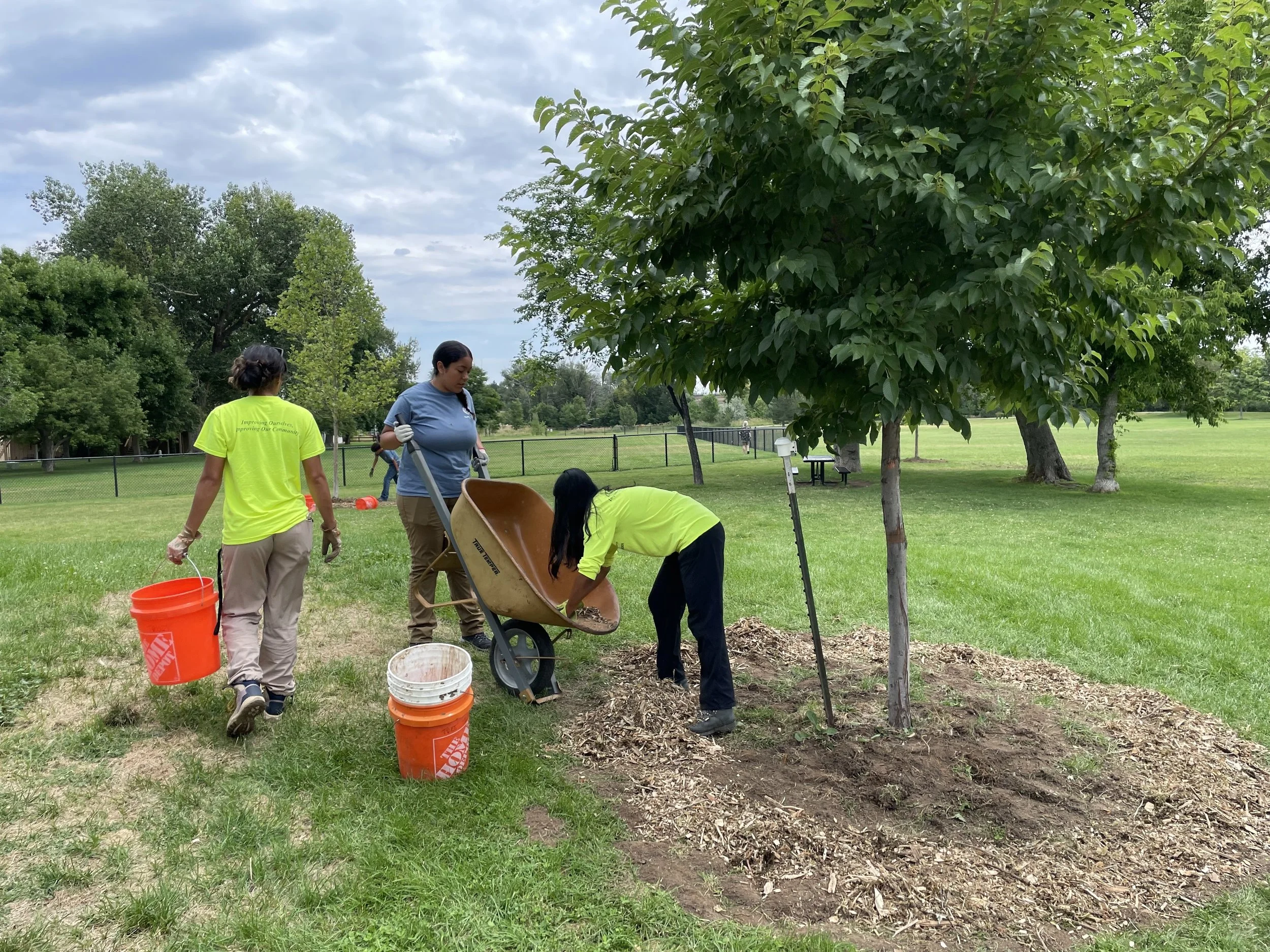
Once trained, the Neighborhood Foresters will be assigned to project sites, then will oversee the year-round care and maintenance of the site’s trees - especially the younger trees planted within the last few years, which need additional care as they become established.
Key responsibilities will include tree watering, mulching, ground-based pruning, health assessments, and more, such as community outreach, to advance ongoing urban forestry and nature-based climate initiatives designed to make our communities more livable and climate-resilient.
Neighborhood Foresters will also receive guidance and mentorship from the Tree Trust and the program’s consulting arborists to support their growth and development, as well as to provide expert guidance, as needed.
Schedule & Compensation:
Part-Time: 10 hours per month, for 12 months
Paid stipend: $300 per month
General Expectations:
Visit your assigned site at least once every 1-2 weeks,
Oversee the stewardship of your assigned trees,
Report your site visits and activities to the Tree Trust,
Attend monthly virtual meetings to debrief with the Tree Trust team, request any needed support or equipment, and discuss potential workshop topics for further education.
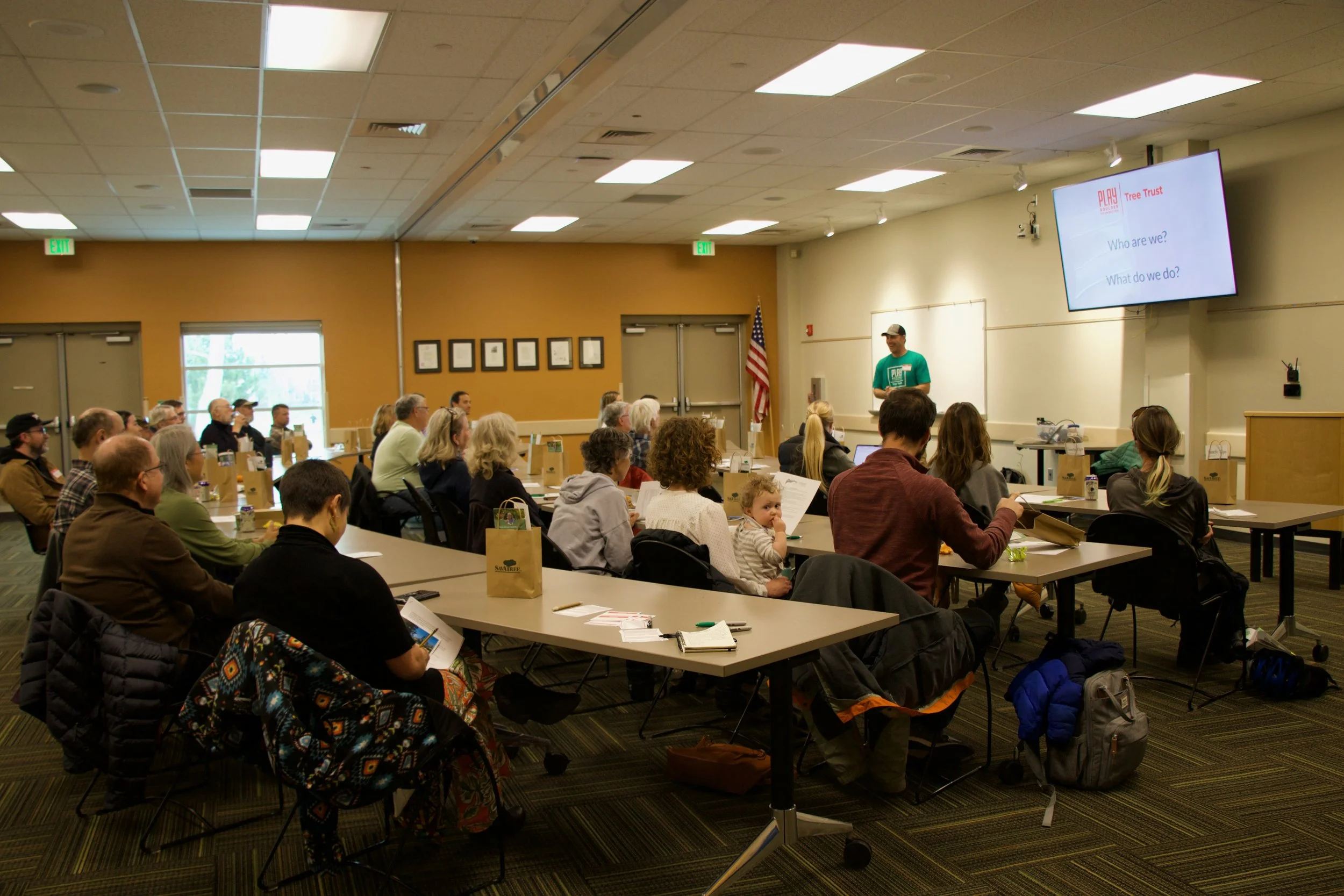
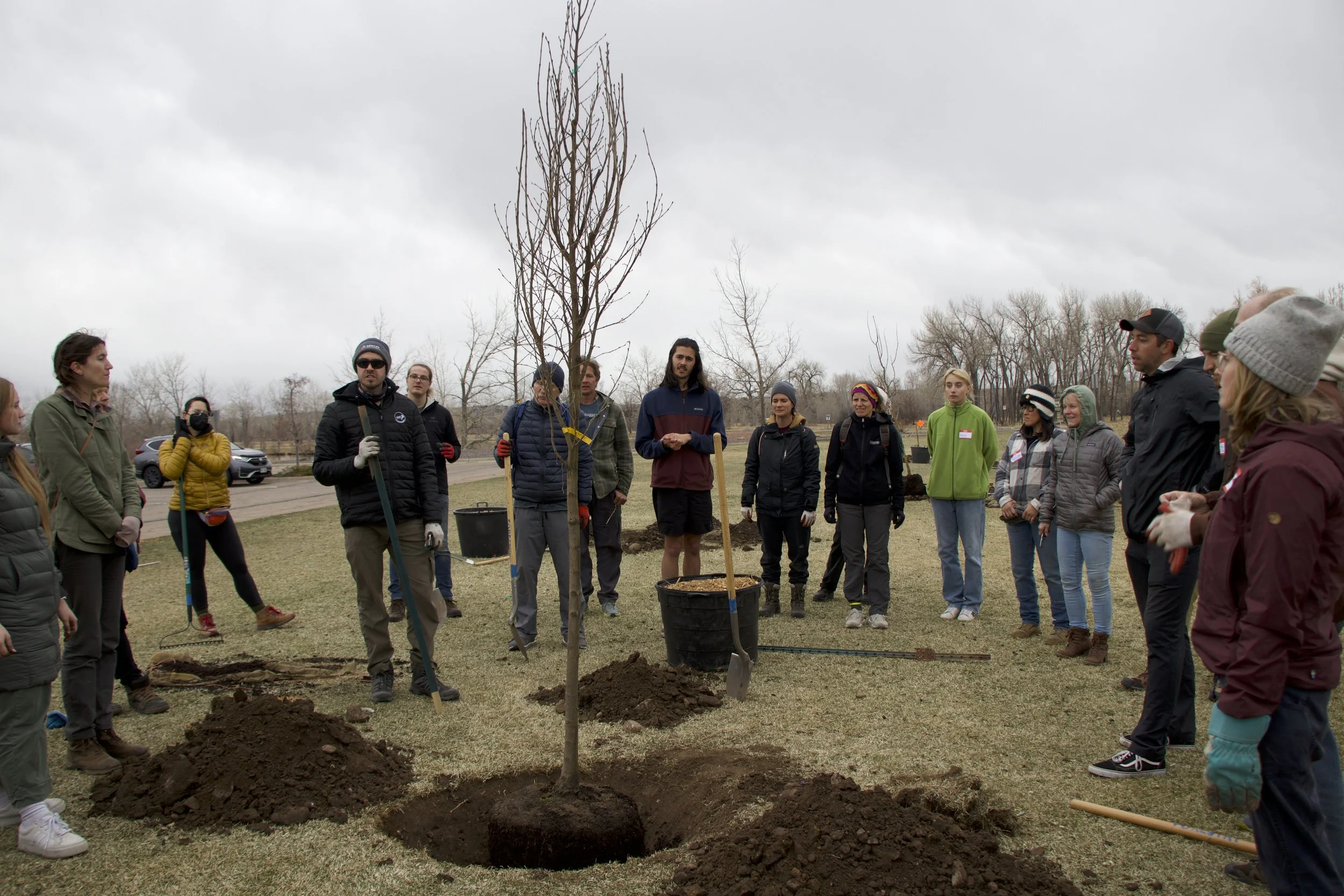
All Neighborhood Foresters are strongly advised to either attend or review the materials of this Spring’s free Tree Tender workshop, which will provide an introduction to tree biology, planting, care, and more:
What: Spring Tree Tender Workshop
When: Three consecutive Tuesdays: March 24th, 31st, and April 7th, from 5 p.m. to 7:30 p.m.
Where: East Boulder Community Center, Ballroom
Recommended & Required Trainings:
Neighborhood Foresters will be required to attend the following Neighborhood Forester trainings, which will build on the content covered in the Tree Tender training:
Friday, April 24
Workshop instructor - Mikl Brawner
Topic - Soil biology, building soil to support trees, and mulching to increase health
3:00p - 6:00p, Location TBD
Friday, May 1
Workshop instructor - Fred Berkelhammer
Topic - Watering trees for healthy establishment in the Front Range climate
3:00p - 6:00p, Location TBD
Friday, May 8
Workshop instructor - David Schaldach
Topic - Tree pruning for healthy growth
3:00p - 6:00p, Location TBD
Note: If you cannot attend one or both of the training sessions, please reach out to mike@playboulder.org and we will try to find an alternative solution.
Overview of Program Hosts & Partners:


PLAY Boulder Foundation Tree Trust: The PLAY Boulder Foundation Tree Trust will collaborate with the program’s consulting arborists to provide an in-depth tree care training, in addition to supplemental workshops throughout the year to empower the Neighborhood Foresters with the tools and knowledge needed to oversee their stewardship responsibilities. The Tree Trust also will lead the coordination and management of each Neighborhood Forester’s tree care activities, with support from the program’s consulting arborists.
City of Boulder Climate Initiatives: The City of Boulder will act as the program’s Employer of Record, hiring the program’s consulting arborists, as well as the Neighborhood Foresters.
Consulting Arborists: The program’s consulting arborists will provide technical support for program design, training/workshop design, installation of projects, and on-call technical support for trees. They will help train the Neighborhood Foresters, as well as design and host supplemental workshops to further the training and empowerment of the program’s Neighborhood Foresters. Finally, the program’s consulting arborists will provide guidance, mentorship, and expert tree care advice to support the Neighborhood Foresters in their tree care responsibilities.
Why This Work is Necessary
As our communities continue to experience and prepare for a hotter, drier, and more unpredictable climate, our trees and landscapes will also need additional support in order to thrive and provide the critical ecosystem services we rely on. Whether it’s shading and cooling our neighborhoods, cleaning our air, reducing flooding, providing habitat for our local biodiversity or food for our sustenance, our urban forests will provide a crucial buffer that will help us mitigate the impacts of climate change and adapt to our new reality.
As new City of Boulder climate modeling shows, our communities and landscapes will be facing more and more days above 95 degrees, high fire-risk days, and drought days, as well as more intense heat waves and unpredictable weather events. This makes the efforts of the PLAY Boulder Foundation Tree Trust to grow and maintain our urban forests even more important.
While the Tree Trust continues to build upon its urban forestry initiatives, these new climate realities make it much harder for new trees to establish, grow, and thrive in a climate that was already difficult to grow trees in. Public properties with urban forests, such as school grounds, city parks, local housing properties, and the surrounding neighborhoods, need more support managing their trees and landscapes, due to insufficient resource and staff capacity. In order for our urban forests to truly thrive and shield us from the impacts of climate change, year-round care and attention from dedicated stewards, or Neighborhood Foresters, is crucial - especially as we work towards building more climate-resilient communities.